
Home > Blog > Wholesale Buying Guide > How Wholesalers, E-commerce Sellers, Florists and Retailers Should Source Artificial Flowers
How Wholesalers, E-commerce Sellers, Florists and Retailers Should Source Artificial Flowers
By PJTL | Aug 2026
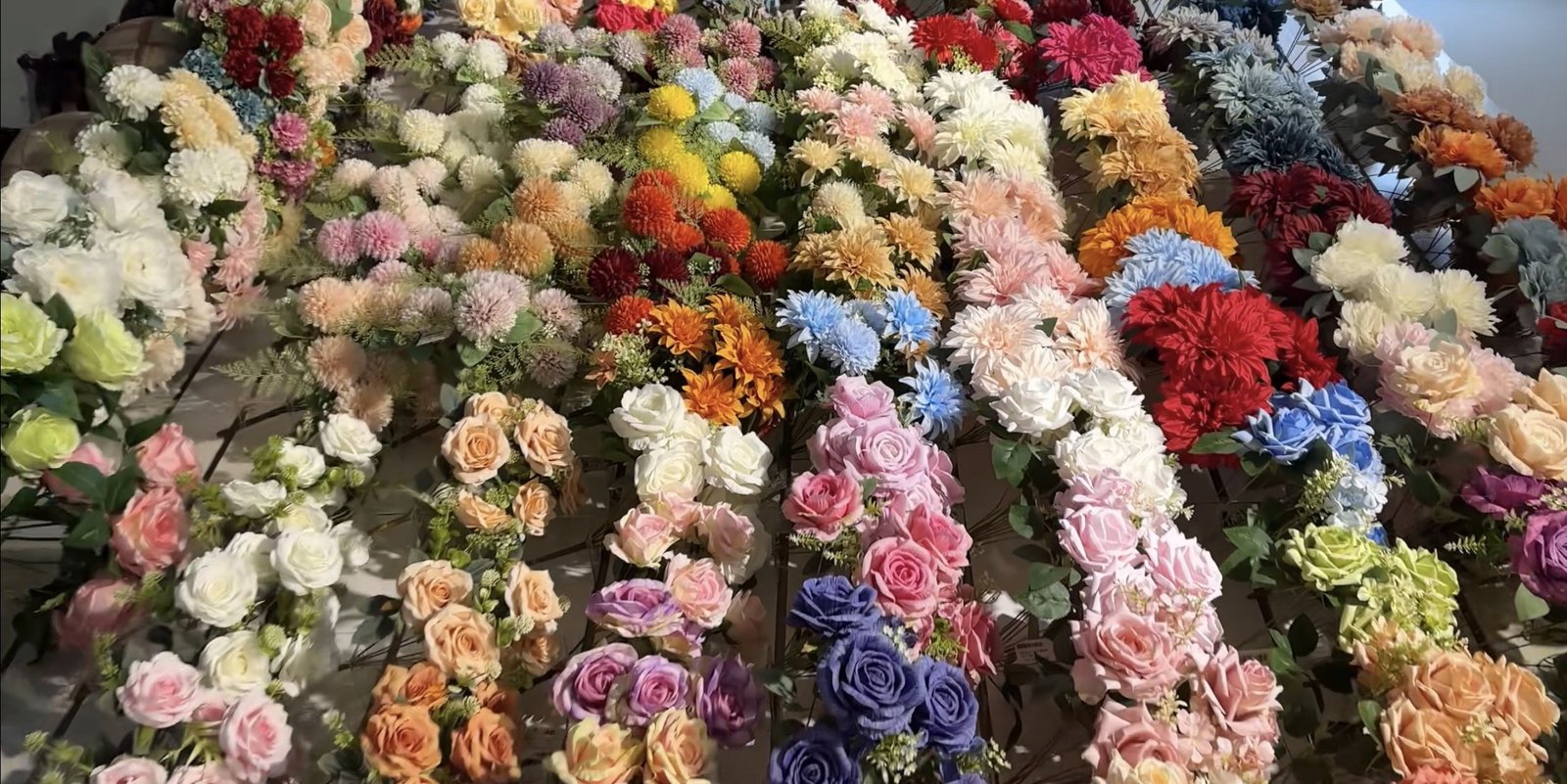
Artificial flower buyers do not all need the same products, packaging or ordering terms.
A wholesale distributor may require hundreds of coordinated SKUs and reliable repeat production. An e-commerce seller may need compact parcel packaging, accurate listing dimensions and barcode labels. A florist may prioritize stem flexibility, color matching and close-up realism, while a retail store may focus on shelf presentation, case-pack quantities and seasonal sell-through.
Using one purchasing strategy for every business model usually creates unnecessary inventory, higher shipping costs or products that do not match the final sales channel.
The wider floral trade includes growers, importers, wholesalers, distributors, flower shops, online sellers and retail stores. In the United States alone, industry data lists approximately 11,744 retail florist shops and an estimated 600 floral wholesale doors. These figures cover the broader flower and plant trade rather than artificial flowers alone, but they illustrate how many different types of businesses operate between manufacturing and the final customer.
At the same time, e-commerce continues to influence product development and packaging. U.S. retail e-commerce sales reached an estimated US$326.7 billion in the first quarter of 2026, representing 16.9% of total retail sales and increasing 9.8% from the same quarter of 2025.
This guide explains how the purchasing requirements of wholesalers, online sellers, florists and retailers differ—and what each buyer should confirm before placing an artificial flower order.
Quick Comparison: What Each Buyer Type Needs
| Buyer type | Main commercial objective | Most important sourcing requirements |
| Wholesaler or distributor | Supply multiple downstream customers profitably | Product range, repeatability, tiered pricing, carton efficiency and stock continuity |
| E-commerce seller | Convert online traffic while controlling fulfillment cost | Accurate appearance, individual packaging, barcode labels, parcel dimensions and low defect rates |
| Florist or event designer | Create professional arrangements and installations | Realism, flexible stems, color matching, mixed quantities and reusable construction |
| Retail store or chain | Achieve strong shelf presentation and sell-through | Retail-ready packaging, case packs, price levels, seasonal timing and easy replenishment |
1. Artificial Flower Sourcing for Wholesalers and Distributors
Wholesalers rarely purchase only one attractive flower.
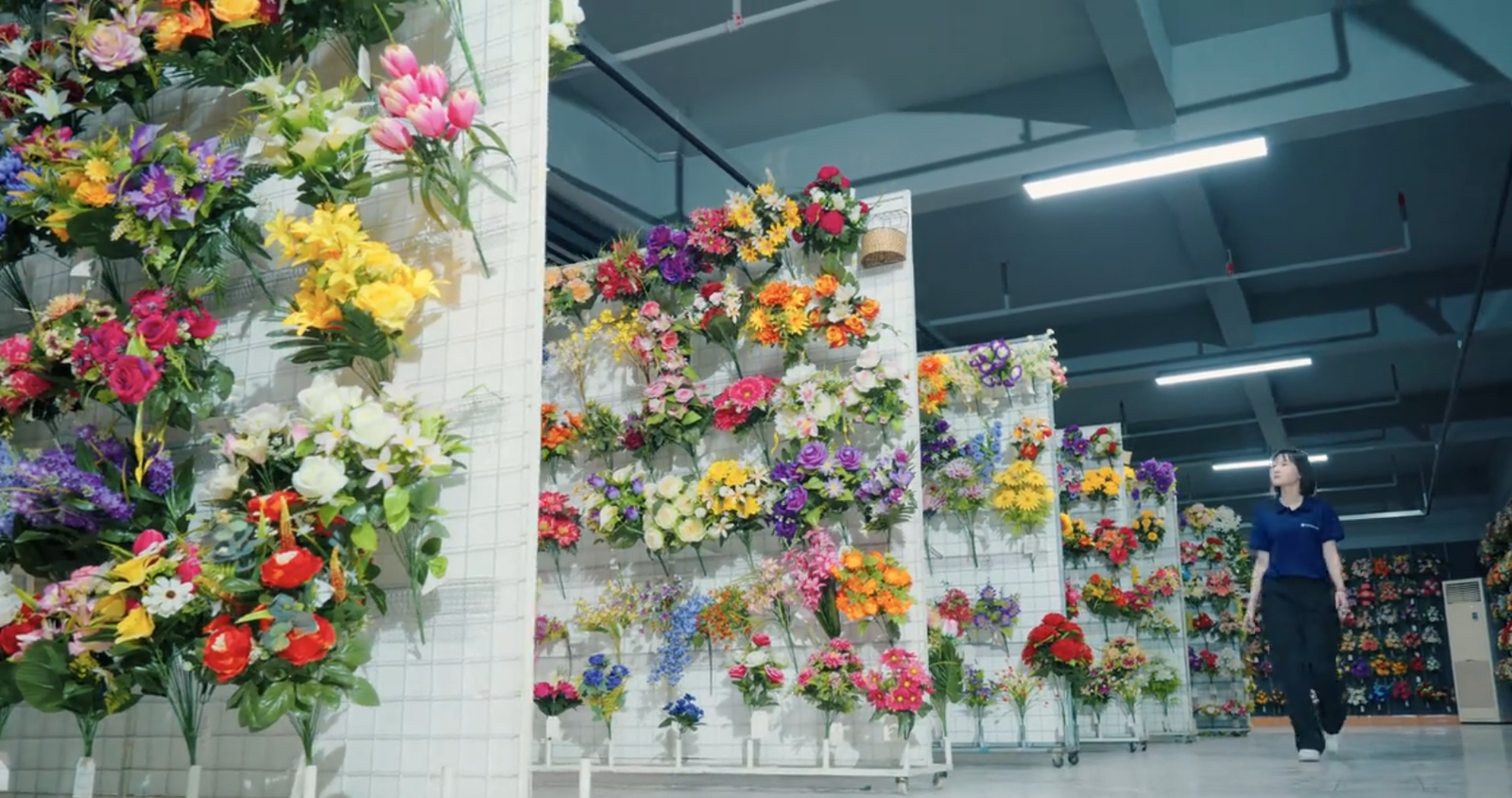
They need an assortment that can serve several customer groups, such as florists, event companies, home-decoration stores, online sellers and regional retailers.
Build a structured assortment
A practical wholesale collection normally contains three product levels.
Core products
These are products with broad and repeatable demand:
- White and ivory flowers
- Roses, hydrangeas and peonies
- Eucalyptus and general greenery
- Blossom branches
- Basic bouquets
- Common wreath and garland styles
Core products should prioritize stable color, repeat production and efficient packaging.
Seasonal products
These may include:
- Spring and Easter colors
- Autumn foliage
- Christmas poinsettias and berries
- Valentine’s Day products
- Wedding color collections
Premium or specialist products
These can include:
- Real-touch flowers
- Oversized branches
- Large wedding installations
- Premium orchids
- Custom colors
- Private-label arrangements
These products can support higher selling prices but may move more slowly than core items.
Confirm repeat-order consistency
A wholesale customer may reorder the same SKU several months later. The supplier should record:
- Approved color
- Material
- Product dimensions
- Flower-head count
- Branch and leaf placement
- Packaging
- Carton quantity
- SKU and label information
A successful first shipment has limited value if the second shipment looks noticeably different.
Compare carton efficiency
Request:
Pieces per inner pack: Pieces per master carton: Carton dimensions: Gross weight: CBM per carton: Total cartons: Total shipment CBM:
Products with slightly higher unit prices may produce a lower landed cost when they use space more efficiently.
2. Artificial Flower Sourcing for E-commerce Sellers
E-commerce sellers sell the image, description and customer expectation before the buyer physically handles the product.
This creates a different set of risks.
Listing accuracy must match the delivered product
Online sellers should confirm:
- Total product length
- Flower-head diameter
- Number of branches
- Number of flower heads
- Material
- Color variation
- Package quantity
- Product weight
- Packaging dimensions
Photographs should represent the approved production sample rather than a separately prepared display sample.
If the listing image looks fuller or larger than the delivered product, returns and negative reviews may follow even when the item is technically within the supplier’s normal standard.
Packaging must survive parcel delivery
Artificial flowers shipped through individual parcels may experience more handling than products delivered on pallets to a wholesaler.
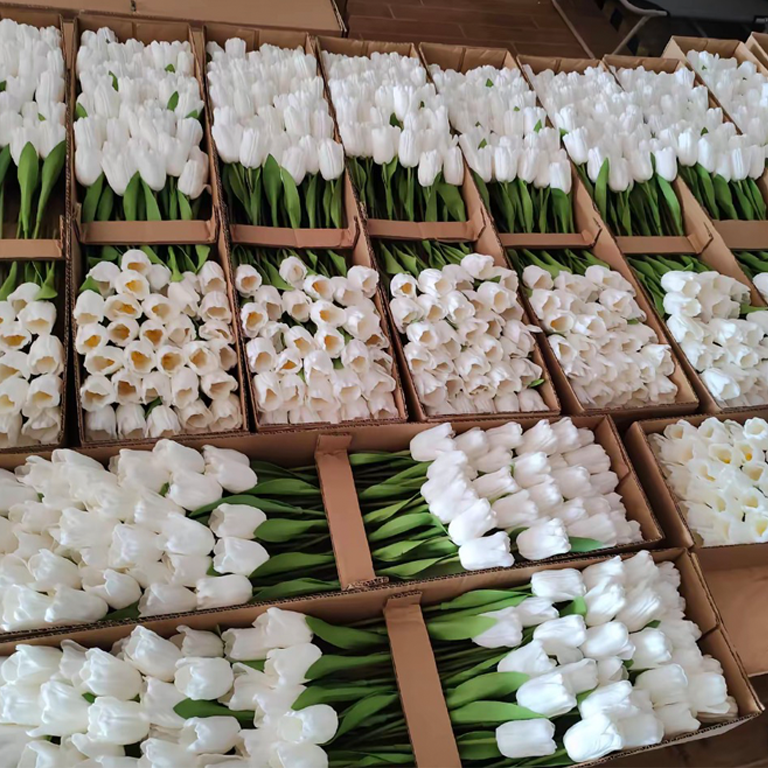
The packed sample should be tested for:
- Crushed petals
- Bent stems
- Detached flower heads
- Permanent leaf creases
- Surface rubbing
- Product recovery after unpacking
- Time required for reshaping
The lowest-volume package is not always the best package. Excessive compression can reduce freight cost while increasing customer complaints.
Confirm barcode and fulfillment requirements
Depending on the platform and fulfillment model, the seller may require:
- SKU labels
- Product barcodes
- Outer-carton labels
- Individual polybags
- Warning labels
- Country-of-origin information
- Marketplace-specific carton quantities
- 3PL warehouse labels
These requirements should be supplied before mass packaging begins.
Start with controlled trial quantities
For a new product, an e-commerce seller usually benefits from testing a focused group of SKUs rather than launching a large catalogue.
A practical first test may include:
- One main flower type
- Three or four colors
- One package quantity
- One packaging format
- One target price level
Sales conversion, returns, customer reviews and packaging complaints can then guide the second order.
3. Artificial Flower Sourcing for Florists and Event Designers
Florists evaluate artificial flowers differently from ordinary retailers.
They are not only selling the product. They are cutting, bending, combining and installing it.
Stem performance matters
Florists should inspect:
- Internal wire strength
- Ease of bending
- Whether the stem holds its position
- Whether the wire becomes exposed
- Whether the stem can be cut safely
- Flower-head attachment strength
- Compatibility with floral foam and arrangement structures
A realistic flower head is not enough if the stem cannot support the intended design.
Close-up realism is important
Wedding bouquets, table arrangements and event installations may be viewed and photographed at close range.
Important details include:
- Petal edge finishing
- Color gradients
- Printed veins
- Surface shine
- Visible glue
- Leaf shape
- Natural flower-head positioning
- Realistic buds and partially opened flowers
The most expensive material is not automatically the most useful. A well-constructed textile flower may perform better in a large installation than a heavier coated flower.
Florists often need mixed products
A florist may need a smaller quantity of several components rather than a full carton of one finished bouquet.
Useful product formats include:
- Individual stems
- Flower branches
- Greenery stems
- Filler flowers
- Loose flower heads
- Leaves and foliage components
- Garlands
- Hanging flowers
- Ready-made bouquets
Suppliers should clearly state whether colors and products can be mixed within the minimum order or carton.
Reusable products need repeatable construction
Artificial flowers are often used in rental arrangements, event installations and seasonal displays.
Florists should consider:
- Cleaning requirements
- Storage space
- Shape recovery
- Surface durability
- Ease of disassembly
- Replacement-component availability
- Reordering the same color later
The purchase price should be evaluated against the expected number of uses, not only against the cost of one event.

4. Artificial Flower Sourcing for Retail Stores
Retailers need products that are easy to understand, display and replenish.
A flower may look good in a factory catalogue but still perform poorly on a retail shelf if the packaging is too large, the product name is unclear or similar colors are difficult to distinguish.
Create clear price levels
A retail artificial flower collection can include:
- Entry-level decorative stems
- Mid-range realistic flowers
- Premium real-touch products
- Ready-made bouquets
- Seasonal products
- Gift or display arrangements
Each level should have a visible difference in product size, material, detail or packaging. Offering several products with almost identical appearance but small price differences can confuse customers.
Confirm retail-ready packaging
Retail requirements may include:
- Hangtags
- Price-label space
- Barcodes
- Product names
- Material information
- Care instructions
- Brand packaging
- Display boxes
- Shelf-ready inner cartons
The packaging should protect the product without hiding the flower from the shopper.
Plan case packs around store size
A large chain may accept full cartons of one color. A small independent retailer may need mixed colors or smaller case packs.
Before placing the order, confirm:
- Units per retail pack
- Units per inner carton
- Units per master carton
- Colors per carton
- Whether cartons can be mixed
- Reorder minimum
- Seasonal reorder deadline
Order according to the retail calendar
Retail buyers should work backwards from the required shelf date.
The purchasing schedule may include:
- Product selection
- Sample approval
- Packaging artwork
- Production
- Quality inspection
- Export shipping
- Customs clearance
- Warehouse receiving
- Store distribution
- Shelf launch
Production completion is not the same as the date the product becomes available in stores.
5. How Product Selection Should Differ by Buyer Type
| Product characteristic | Wholesaler | E-commerce seller | Florist | Retailer |
| Wide color selection | Very important | Moderate | Very important | Important |
| Stable repeat production | Essential | Essential | Important | Essential |
| Individual packaging | Sometimes | Essential | Usually less important | Important |
| Barcode labeling | Depends on customer | Essential | Usually limited | Essential |
| Stem flexibility | Depends on product | Moderate | Essential | Moderate |
| Close-up realism | Important | Essential for listing | Essential | Important |
| Mixed-SKU ordering | Useful | Useful for testing | Very important | Useful for small stores |
| Retail-ready boxes | Optional | Sometimes | Rarely | Important |
| Compact parcel size | Limited importance | Essential | Limited importance | Moderate |
| Large installation products | Depends on market | Difficult to ship | Important | Limited |
6. Do Not Use One MOQ Strategy for Every Customer
MOQ should be separated into several parts:
- Finished-product MOQ
- MOQ per color
- MOQ per SKU
- Packaging MOQ
- Printed-label MOQ
- Custom-material MOQ
- Custom-color MOQ
- Mold or tooling MOQ
A supplier may accept a small quantity of an existing product but require a higher minimum for custom-colored fabric or printed retail boxes.
Suggested trial-order approach
| Buyer | Lower-risk trial-order structure |
| Wholesaler | Several core SKUs with limited colors and clear reorder potential |
| E-commerce seller | Few SKUs with complete individual packaging and listing-ready samples |
| Florist | Mixed flower stems, greenery and components for design testing |
| Retailer | Small coordinated collection with defined price points and case packs |
The goal of the first order is not to display the supplier’s entire catalogue. It is to collect useful sales and performance information.
7. Approve Both the Product and the Packaging
The approved product sample should record:
- SKU
- Color
- Material
- Total length
- Flower-head diameter
- Branch count
- Leaf count
- Product weight
- Stem construction
- Surface finish
The packed sample should record:
- Packaging orientation
- Pieces per pack
- Pieces per carton
- Carton dimensions
- Compression level
- Barcode position
- Label position
- Appearance after unpacking
This is particularly important for e-commerce sellers and retailers, but wholesalers and florists also need to know how much reshaping will be required after delivery.
8. Compare Landed Cost Instead of Factory Price Alone
A more useful purchasing calculation is:
Landed cost per sellable unit =
Product cost + packaging + branding or development cost + inland export charges + international freight + inspection + duty and taxes + destination handling + expected damage or rework
÷ sellable units
Different buyer types should also include different operating costs.
E-commerce sellers
Include fulfillment fees, parcel packaging, returns and replacement costs.
Florists
Include design labor, preparation time, storage and expected reuse.
Retailers
Include warehouse handling, store distribution, markdown risk and unsold seasonal inventory.
Wholesalers
Include pallet or carton storage, sales samples, downstream delivery and customer credit risk.
9. Evaluate the Supplier According to Your Business Model
Ask questions that relate to how you actually sell.
Questions for wholesalers
- Can the supplier maintain colors across repeat orders?
- Can several SKUs be consolidated?
- Are carton and CBM details available before ordering?
- Can the supplier provide product data and catalogues?
- Are regional or product exclusivity options available?
Questions for e-commerce sellers
- Can the supplier apply individual barcodes?
- Can parcel-size packaging be tested?
- Are product dimensions consistent?
- Can photographs be taken from approved production samples?
- How are defective or incorrectly labeled units handled?
Questions for florists
- Can stems and greenery be mixed?
- Are loose components available?
- How flexible is the internal wire?
- Can colors be matched across several flower types?
- Can the same product be reordered for future events?
Questions for retailers
- Can retail-ready packaging be produced?
- What is the packaging MOQ?
- Can different colors share the same carton?
- Are barcodes and carton marks checked before shipment?
- Can the supplier meet seasonal delivery deadlines?
10. Information to Include in an RFQ
Send a structured request instead of asking only for the “best price.”
Business type:
Target country:
Sales channel:
Target customer:
Product or reference images:
Required flower types:
Required colors:
Preferred materials:
Dimensions:
Estimated quantity by SKU:
Required MOQ flexibility:
Individual packaging:
Retail packaging:
Barcode and label requirements:
Pieces per carton:
Destination country or port:
Required warehouse arrival date:
Testing or documentation requirements:
Private-label or exclusivity requirements:
The supplier can then recommend a product, packing and order structure that matches the intended business model.
Working with PJTL Flowers
PJTL currently presents separate supply solutions for wholesale buyers, private-label brands and e-commerce sellers. Its product range includes artificial flowers, greenery, plants, wreaths, garlands and seasonal decorations, with support for product selection, sampling, customization, packaging and international shipment.
When requesting a quotation, buyers should identify whether they operate as a distributor, online seller, florist, event company or retailer.
This allows the product recommendation to consider:
- Assortment depth
- Price position
- Packaging
- Case quantities
- Barcode requirements
- Stem performance
- Stock availability
- Customization
- Reorder planning
The correct artificial flower supplier is not simply the company offering the lowest price. It is the supplier capable of matching the product, packaging and production system to the way the buyer earns revenue.
Conclusion
Wholesalers, e-commerce sellers, florists and retailers may purchase similar artificial flowers, but they do not purchase them for the same reason.
Wholesalers need range and repeatability.
E-commerce sellers need listing consistency and parcel-ready packaging.
Florists need flexible, realistic and reusable design materials.
Retailers need clear price levels, shelf-ready presentation and dependable seasonal delivery.
Before ordering, buyers should define their business model, target customer, sales channel, packaging requirements and inventory strategy.
A product that is suitable for one buyer may be commercially inefficient for another. Professional sourcing begins by matching the product and supply terms to the final method of sale.
Frequently Asked Questions
What artificial flowers are best for wholesalers?
Wholesalers should prioritize broadly accepted flower types, stable colors, efficient cartons and products that can be reproduced consistently for repeat orders.
What should e-commerce sellers check before ordering artificial flowers?
Check product dimensions, photograph-to-product consistency, individual packaging, barcode requirements, parcel dimensions and shape recovery after unpacking.
What artificial flowers are suitable for florists?
Florists normally benefit from realistic flower heads, flexible wired stems, greenery, filler flowers, individual stems and products that can be mixed or reused.
What packaging do retail stores need?
Retail packaging may include hangtags, barcodes, branded sleeves, display boxes, price-label areas and shelf-ready inner cartons.
Can different colors and products be mixed in one order?
This depends on the supplier, product and packaging. Buyers should confirm whether the MOQ applies per product, per color, per carton or to the complete order.
Should buyers choose stock products or customized products?
Stock products are generally more suitable for testing and faster ordering. Customized products are more appropriate when the buyer needs exclusive colors, structures, branding or packaging.
Ready to Start?
Tell us what you’re looking for. We’ll get back to you within 24 hours with pricing, availability, and a sample offer.