
Home > Blog > Industry Insights > 2026 Artificial Flower Trends: Colors, Product Formats and Assortment Planning for Wholesale Buyers
2026 Artificial Flower Trends: Colors, Product Formats and Assortment Planning for Wholesale Buyers
By PJTL | July 2026
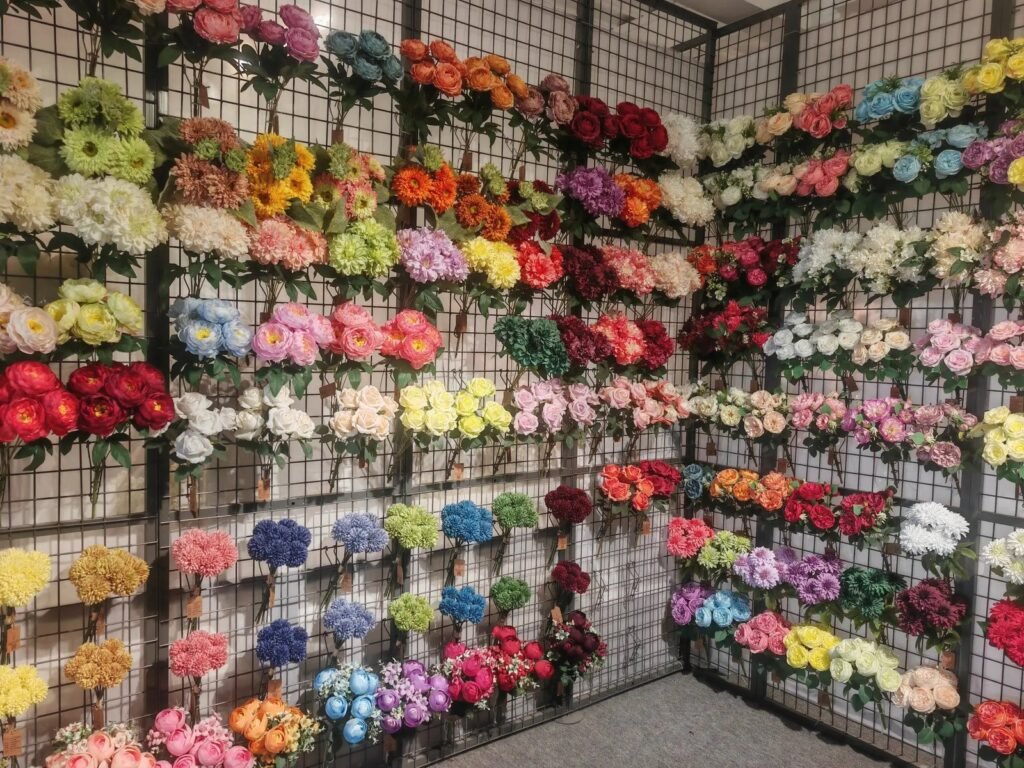
Artificial flower trends can help wholesalers discover new opportunities, but following every trend is not a reliable buying strategy.
A profitable collection normally combines stable everyday products with a smaller number of seasonal colors, statement products and experimental designs.
Buyers sourcing [wholesale artificial flowers] should separate reliable core products from shorter-term seasonal and trend-led products.
For wholesale buyers, the main question is not simply:
What is trending?
The more useful questions are:
- Which trends are suitable for our target market?
- Which products can be reordered throughout the year?
- Which colors should be tested in smaller quantities?
- Which designs will photograph well online?
- Which products are practical to pack and ship?
- Which trends support retail, hospitality, weddings or commercial projects?
Grand View Research estimates that commercial applications accounted for more than 58% of artificial flower market revenue in 2024. It also projects online-channel sales to grow at a compound annual rate of 5.9% from 2025 to 2030. These figures suggest that product development should consider commercial use and online presentation alongside traditional home-decoration demand.
The following trends provide a practical starting point for wholesalers planning artificial flower collections for 2026 and beyond.
1. Warm Neutrals Are Replacing Cold Gray Palettes
Warm, natural neutrals are becoming more important across interior design.
Sherwin-Williams selected Universal Khaki as its 2026 Color of the Year and described a broader movement away from cooler grays toward warmer, sanded neutrals. Its Foundational Neutrals palette includes warm whites, khaki shades, darker neutrals and colors with more visible undertones.
For artificial flower buyers, this direction can translate into:
- Ivory roses
- Cream hydrangeas
- Champagne peonies
- Beige pampas-style stems
- Soft brown foliage
- Dusty eucalyptus
- Muted olive greenery
- Taupe and sand-colored bouquets
These colors work well in home décor, hotels, restaurants, wedding rentals and retail collections because they can be combined with wood, stone, linen, ceramics and other natural-looking materials.
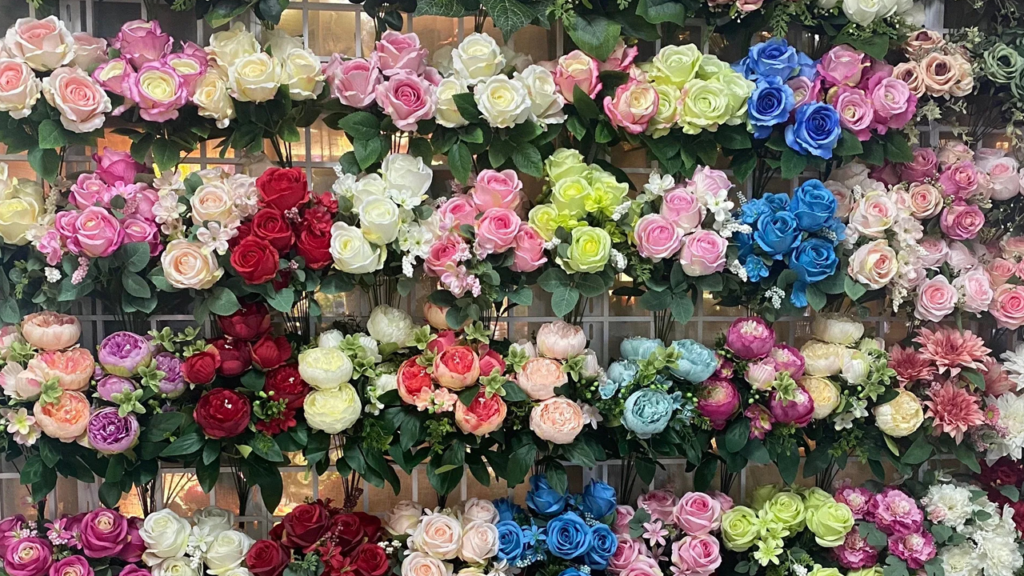
Warm neutral flowers can also be coordinated with an [artificial greenery collection] featuring eucalyptus, muted foliage and natural-looking leaf stems.
Wholesale recommendation
Do not build a neutral collection using only pure white flowers.
A more commercially useful range may include several related tones:
- Warm white
- Ivory
- Cream
- Champagne
- Beige
- Taupe
- Dusty olive
Subtle differences make the assortment look more developed while allowing buyers to create coordinated bouquets and displays.
2. Frosted Pastels Are Becoming More Refined
Pastel colors remain relevant, but the direction is shifting away from overly bright or childish shades.
Sherwin-Williams’ Frosted Tints palette includes softened lavender, pale green, subtle blue and gray-influenced pastel colors. The emphasis is on gentle color that can still work in sophisticated interiors.
Suitable artificial flower colors may include:
- Dusty lavender
- Pale lilac
- Celery green
- Powder blue
- Blush pink
- Soft peach
- Muted yellow
- Gray-green
These shades are particularly suitable for:
- Spring collections
- Easter products
- Bridal flowers
- Baby and celebration décor
- Boutique home-decoration ranges
- E-commerce bouquet sets
Product-development opportunity
Instead of producing unrelated pastel SKUs, buyers can develop one coordinated palette across several product forms:
- One focal flower
- One smaller filler flower
- One foliage stem
- One bouquet
- One garland or wreath
This gives retailers a collection they can merchandise together rather than a group of isolated products.
3. Sunbaked Colors Add Warmth and Visual Impact
Warm desert-inspired colors are another important direction.
Sherwin-Williams’ Sunbaked Hues palette includes terracotta, coral, yellow, red-brown and sun-influenced colors. These tones provide a warmer alternative to conventional pink-and-white floral collections.
For artificial flower assortments, this can include:
- Terracotta roses
- Burnt-orange dahlias
- Coral peonies
- Ochre chrysanthemums
- Rust-colored foliage
- Burgundy filler flowers
- Amber leaves
- Warm yellow blossoms
These colors are suitable for:
- Autumn collections
- Thanksgiving decorations
- Bohemian weddings
- Mediterranean-style interiors
- Retail window displays
- Restaurants and hospitality projects
Buying consideration
Warm colors can vary significantly between computer screens, printed catalogues and physical products.
Buyers developing terracotta, coral, rust or burgundy products should approve physical color samples rather than relying only on photographs. Pantone references can help communicate direction, but the final material sample should remain the production standard.
Material choice can also affect color depth, surface shine and batch consistency. Read our [artificial flower materials guide] to compare polyester, PE, PU, latex and real-touch constructions.
4. Deep, Restorative Colors Support Premium Collections
Deep colors are no longer limited to Christmas or autumn products.
Current design forecasts include plum, auburn, dark teal, bronze, dark green and near-black neutrals. These shades can create a more dramatic and premium presentation, especially when combined with lighter flowers or metallic details.
Potential products include:
- Burgundy roses
- Plum hydrangeas
- Dark calla lilies
- Aubergine orchids
- Deep-green magnolia leaves
- Bronze foliage
- Dark-red berries
- Moody wedding bouquets
These colors can work well in:
- Hotel and restaurant décor
- Luxury home collections
- Autumn and winter ranges
- Editorial wedding designs
- Event installations
- High-contrast retail photography
Wholesale recommendation
Deep-colored products should be checked carefully for:
- Color transfer
- Uneven coating
- Visible dust
- Excessive surface shine
- Differences between production batches
- Rubbing against pale-colored flowers during packing
Dark colors can create strong visual impact, but quality problems are also more visible at close range.
5. Sculptural and Mono-Botanical Designs Are Growing
Many floral designers are moving away from tightly packed, symmetrical arrangements.
Marginpar’s 2026 trend report highlights organic forms, limited material varieties used in abundance and arrangements that appear more like floral sculptures. Wedding trend reports also point toward mono-bloom bouquets and organic silhouettes rather than conventional rounded arrangements.
This creates opportunities for artificial products such as:
- Long calla lily stems
- Cascading amaranthus
- Large hydrangea heads
- Single-variety tulip bundles
- Oversized blossom branches
- Hanging flower sprays
- Flexible foliage branches
- Architectural orchid stems
Buyers developing ceremony arrangements, bridal products and event installations can explore PJTL’s [wholesale artificial wedding flower collection].
Why this matters for artificial flower suppliers
Sculptural arrangements require more than a realistic flower head.
Buyers should also evaluate:
- Stem length
- Internal wire strength
- Bending control
- Branch direction
- Product balance
- Flower-head positioning
- Weight
- Packing recovery
A product may look realistic but still be unsuitable for large installations if its stem cannot hold the required shape.
6. Smaller Mono-Bloom Bouquets Can Complement Large Installations
The market is not moving in only one direction.
Large installations are receiving attention, but smaller mono-bloom bouquets are also appearing in contemporary wedding and retail design. The Knot’s 2026 wedding trend coverage identifies petite monofloral bouquets, including calla lilies and lily-of-the-valley-inspired designs.
This gives buyers two related product directions:
Statement products
- Oversized branches
- Cascading stems
- Flower walls
- Hanging installations
- Ceremony arrangements
Compact products
- Small bridal bouquets
- Single-flower bundles
- Bud vases
- Table flowers
- Gift-ready bouquets
A balanced wedding collection can include both formats instead of focusing only on large arches and flower walls.
7. Generic Flower Walls Are Giving Way to More Customized Scenes
Wedding and event design is increasingly focused on personalization and complete environments rather than standardized decoration.
Vogue’s 2026 wedding trend coverage points toward immersive event design and more distinctive scenic walls instead of generic flower-wall backgrounds.
For wholesale and rental buyers, this suggests demand for modular components rather than one fixed design.
Useful product formats include:
- Detachable floral panels
- Roll-up flower walls
- Garland sections
- Hanging flower pieces
- Corner arrangements
- Aisle-ground flowers
- Arch flower arrangements
- Reusable greenery bases
- Interchangeable seasonal flowers
Product-development opportunity
A modular base can be combined with different colors or flower varieties.
Modular flower walls, custom color combinations and branded collections can be developed through PJTL’s [OEM and ODM artificial flower service].
For example, the same greenery structure could support:
- White wedding flowers
- Blush spring flowers
- Orange autumn flowers
- Red Christmas flowers
This can reduce the number of completely different structures a buyer needs to hold in inventory.
8. Online Sales Require Products Designed for the Camera and the Carton
Online retail continues to influence artificial flower product development.
In the United States, e-commerce represented 16.9% of retail sales in the first quarter of 2026, while adjusted e-commerce sales increased 9.8% compared with the same period of 2025.
Products intended for Amazon, Shopify, marketplace or social-commerce sellers should be evaluated for:
- Photograph-to-product consistency
- Clear dimensions
- Strong close-up detail
- Color accuracy
- Individual packaging
- Barcode placement
- Parcel dimensions
- Shape recovery after unpacking
- Customer reshaping requirements
Amazon, Shopify and marketplace buyers can review our [artificial flower solutions for e-commerce sellers] for stock-based ordering, barcode labeling and online-sales packaging support.
A highly detailed flower may photograph well but create poor customer reviews if it arrives heavily compressed.
Conversely, a simple product with stable shape, consistent color and efficient packaging may perform better commercially.
9. Buyers Should Separate Core Products from Trend Products
Following trends does not require replacing an entire catalogue.
A practical assortment can be divided into three groups.
Core products
These should have broad, repeatable demand:
- White and ivory flowers
- Green foliage
- Eucalyptus
- Roses
- Hydrangeas
- Peonies
- Blossom branches
- Basic bouquets
- Everyday greenery
Core products should prioritize stable colors, repeat-order consistency and practical packaging.
Seasonal and trend products
These can follow current color and design directions:
- Frosted pastels
- Terracotta
- Burgundy
- Dark plum
- Oversized sculptural stems
- Mono-bloom bouquets
- Modular installations
Order quantities should reflect the length of the selling season and the buyer’s previous sales data.
Test products
Test products allow the buyer to evaluate a trend without committing to a large collection.
Examples include:
- One new color
- One new material
- One unusual flower type
- One premium real-touch SKU
- One event-installation component
- One new packaging format
The results can then guide the next order.
10. Trends Should Be Adapted to the Target Market
A trend forecast is not a purchase order.
Different customers may interpret the same direction differently.
| Buyer type | More suitable interpretation |
| Wholesale distributor | Broad color families and repeatable product forms |
| Home décor retailer | Coordinated stems, bouquets and shelf presentation |
| E-commerce seller | Photogenic products with compact, protective packaging |
| Wedding supplier | Flexible stems, realistic close-up appearance and reusable installations |
| Hotel or restaurant buyer | Durable arrangements, stable colors and long-term display |
| Private-label brand | Exclusive palette, packaging and coordinated product story |
Before selecting a trend, buyers should define:
- Target country
- Customer type
- Retail or wholesale price
- Sales channel
- Selling season
- Required margin
- Expected reorder frequency
- Packaging limitations
11. What to Send a Supplier When Developing a Trend Collection
A useful development request should include:
Target market:
Target customer:
Sales channel:
Selling season:
Reference images:
Preferred color direction:
Pantone or physical color references:
Required flower types:
Required greenery:
Product dimensions:
Preferred materials:
Target price position:
Estimated quantity per SKU and color:
Packaging requirements:
Required launch date:
Exclusivity requirements:
Reference images should communicate the desired direction, but they should not be treated as the complete product specification.
The supplier still needs to confirm materials, dimensions, construction, colors, packaging and production feasibility.
Planning a 2026 Collection with PJTL Flowers
PJTL Flowers supplies artificial flowers, greenery, plants, wedding products, wreaths, seasonal decorations and flower components for wholesale buyers, retailers, private-label brands and e-commerce sellers. The website currently supports stock-based ordering, OEM/ODM development, custom colors, materials, dimensions and packaging.
For in-stock products, PJTL currently states that no MOQ is required, although production minimums apply when products are out of stock. Current website timelines list approximately 3–7 working days for the quality control and packing of in-stock orders, 20–35 working days for out-of-stock standard products, and 30–45 working days for custom or OEM orders after sample approval. Final conditions should be confirmed for each project.
To develop a trend-based collection, send PJTL your reference images, target market, preferred colors, estimated quantities, packaging requirements and required launch date, then [request a custom artificial flower quotation].
Conclusion
The strongest artificial flower assortments for 2026 will not depend on one color or one product type.
Current directions include warmer neutrals, refined pastels, sunbaked colors, deeper premium shades, sculptural stems, mono-bloom bouquets and modular event products.
Wholesale buyers should use these trends selectively.
Maintain reliable core products, introduce seasonal colors in controlled quantities and test more experimental designs before expanding them into a complete collection.
The commercial value of a trend depends on whether the product can be manufactured consistently, packed efficiently, photographed accurately and reordered at the right time.
Frequently Asked Questions
What artificial flower colors are trending in 2026?
Important directions include warm neutrals, ivory, khaki, dusty green, lavender, soft blue, terracotta, coral, burgundy, plum and deep botanical green.
Which artificial flower products should wholesalers stock?
A balanced range can include core flower stems, greenery, bouquets, blossom branches, seasonal colors, wedding products and a smaller number of statement or experimental designs.
Are neutral artificial flowers still popular?
Yes, but warmer neutrals such as ivory, champagne, beige and khaki are increasingly replacing colder white-and-gray combinations.
What artificial flowers are suitable for online sellers?
Products should have consistent colors and dimensions, clear close-up details, protective packaging and good shape recovery after parcel transport.
How should buyers test a new floral trend?
Begin with a limited number of coordinated SKUs or colors, review sales and customer feedback, and increase the range only after commercial demand has been confirmed.
Can artificial flower colors and packaging be customized?
Many colors, materials, sizes and packaging formats can be customized. Minimum quantities and development time depend on the product and requested components.
Ready to Start?
Tell us what you’re looking for. We’ll get back to you within 24 hours with pricing, availability, and a sample offer.