
Home > Blog > OEM & Private Label Guide > How to Launch a Private Label Artificial Flower Collection in 2026
How to Launch a Private Label Artificial Flower Collection in 2026
By PJTL | July 2026
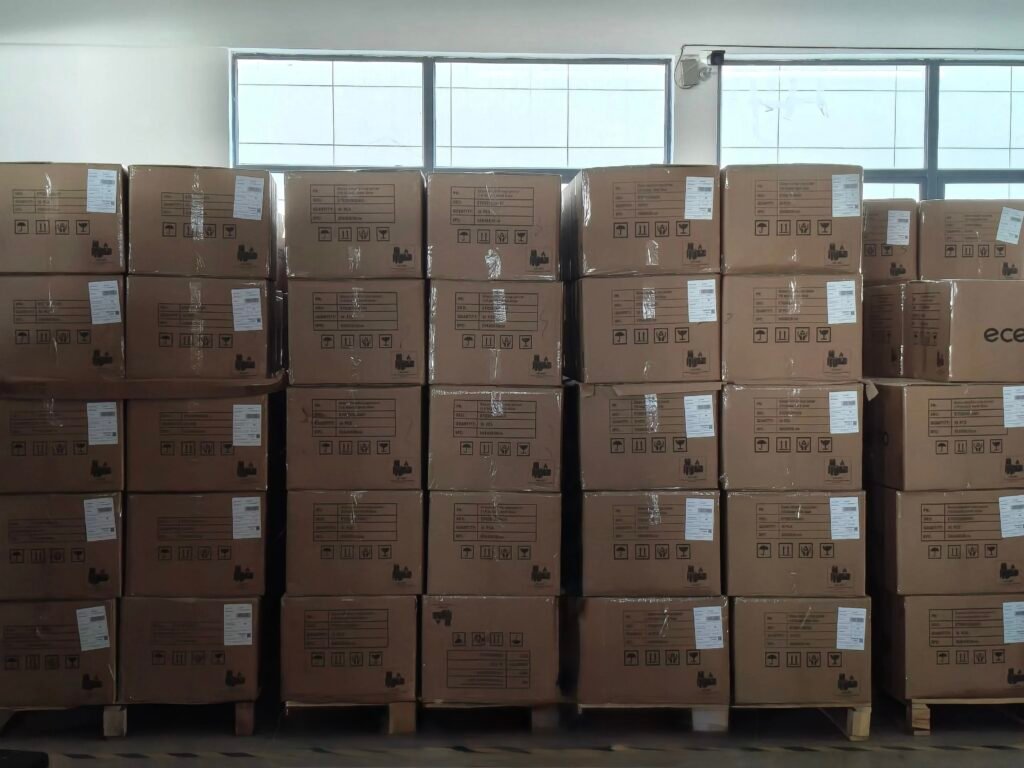
Private-label artificial flowers allow retailers, wholesalers, event suppliers, and e-commerce brands to build a recognizable product range without investing in their own manufacturing facility.
However, private label is not simply about placing a logo on a stock flower. The commercial result depends on how clearly the product is specified, how accurately the approved sample is reproduced, how efficiently the products are packed, and whether the final landed cost supports the intended selling price.
In 2024, the United States imported approximately US$1.15 billion of artificial flowers, foliage, fruit, and related articles under HS 670210 and HS 670290. Around US$1.10 billion of that value came from China, representing approximately 96.1% of the combined import value. These customs categories include more than flowers alone, but they provide a useful indication of the depth of China’s artificial botanical supply chain. They also explain why many buyers encounter similar catalog products. A successful private-label range therefore needs differentiation through color, construction, material, packaging, assortment, or exclusive development—not only a different brand
Understand Private Label, OEM, and ODM
The terms private label, OEM, and ODM are sometimes used interchangeably, but they represent different levels of product development.
| Manufacturing route | Product development responsibility | Typical customization | Best suited to |
| Private label | The supplier already has the basic product | Logo, hangtag, barcode, packaging, and minor product adjustments | New collections and lower-risk market testing |
| OEM | The buyer provides detailed specifications or an original design | Product dimensions, materials, colors, construction, packaging, and branding | Established brands requiring stronger product control |
| ODM | The supplier helps design and develop the product for the buyer’s brand | Concept development, material selection, sampling, product engineering, and production | Buyers who have a market concept but need development support |
JETRO defines OEM as manufacturing products under the client’s brand, normally based on specifications supplied by the client. ODM includes both product design and manufacturing under the client’s brand. It also recommends clearly defining the rights and obligations of both parties in a written agreement.
Because suppliers may use these terms differently, the quotation and purchase agreement should state exactly who is responsible for the design, tooling, packaging artwork, testing, and quality approval.
Define the Commercial Position Before Selecting Products
A factory catalog should not determine your brand strategy.
Where MOQ gets more complicated is customization. Adding your own packaging, a printed logo, or a private-label design usually pushes the minimum higher than a standard reorder, since the factory is setting up a production run specifically for you. That’s normal, not a red flag — it’s the cost of a dedicated line versus one already running your item.
Before selecting flower types, establish the commercial position of the collection:
- Target country and customer group
- Retail, wholesale, project, or e-commerce sales channel
- Intended retail or wholesale price level
- Main application, such as home décor, weddings, hospitality, or seasonal display
- Launch date and required warehouse arrival date
- Expected reorder frequency
- Required branding and packaging format
Different channels create different product requirements.
An e-commerce seller may prioritize accurate product dimensions, photograph-to-product consistency, compact parcel size, and protection against deformation. A home décor retailer may focus more on shelf presentation, barcode placement, color coordination, and gross margin. A wedding or event supplier may prioritize close-up realism, color consistency, stem flexibility, and the ability to reorder the same style for future projects.
For a first order, a focused collection is normally easier to control than a large assortment of unrelated styles. A compact range can share colors, packaging components, and display concepts while generating clearer sales data for future reorders.
Choose the Appropriate Customization Level
Private-label artificial flower projects generally fall into three levels.
Level 1: Brand an Existing Product
The buyer selects an existing flower and adds:
- A branded hangtag
- Barcode or SKU label
- Custom carton marks
- Branded polybags or sleeves
- Retail-ready packaging
This is usually the fastest route for testing a market because the product construction and materials already exist.
Level 2: Modify an Existing Product
The buyer starts with an existing flower but changes one or more elements:
- Petal or leaf color
- Stem length
- Flower-head size
- Number of branches or flower heads
- Material or surface finish
- Product assortment
- Packaging quantity
- Branded presentation
This level creates more differentiation without requiring the development of every component from the beginning.
Level 3: Develop an Exclusive Product
A fully developed project may involve a new structure, custom-molded components, exclusive color combinations, original flower-head shapes, special arrangements, or a coordinated seasonal collection.
Exclusive development offers stronger differentiation, but it may require more sampling, tooling, material preparation, and written agreements covering ownership and sales exclusivity.
Send a Quote-Ready Buyer Brief
A message such as “Please send your best price for high-quality artificial flowers” does not give a supplier enough information to prepare a reliable quotation.
A useful buyer brief should include the following:
Target market or country:
Target customer:
Sales channel:
Product type:
Reference photos or drawings:
Application or use:
Required total length:
Flower-head diameter:
Number of branches or flower heads:
Preferred material:
Required look and hand feel:
Color or Pantone reference:
Stem structure and flexibility:
Packaging type:
Pieces per retail pack:
Logo, hangtag, barcode, and carton-mark requirements:
Estimated quantity per SKU and color:
Target FOB price or target selling-price position:
Destination country or port:
Required warehouse arrival date:
Testing or compliance requirements:
Exclusivity requirements:
Tooling ownership requirements:
The buyer does not need to know every technical detail at the beginning. However, target market, reference images, quantity, price position, packaging, and required delivery date should be provided as early as possible.
These details help the supplier determine whether an existing style can be used, whether modifications are required, and which costs need to be included in the quotation.
Specify Materials and Product Feel Precisely
Artificial flower terminology is not always standardized. Words such as “silk,” “soft-touch,” “real-touch,” and “premium” may describe the appearance or marketing position rather than the complete material composition.
| Possible material or component | Common use | What the buyer should verify |
| Polyester or textile petals | Flower petals and fabric leaves | Color accuracy, edge finishing, printing, sheen, fraying, and crease recovery |
| Molded PE or PVC | Leaves, greenery, stems, and molded details | Surface shine, flexibility, seam marks, odor, thickness, and color consistency |
| PU, latex, or coated surfaces | Products marketed with a natural or real-touch feel | Actual composition, tackiness, color transfer, yellowing, and surface durability |
| EVA or foam components | Selected petals, accents, or decorative parts | Compression marks, shape recovery, texture, and tearing |
| Wire and plastic stems | Product support and shaping | Wire strength, bending performance, exposed wire, and attachment security |
Do not use “real-touch” as the complete product specification. Ask for actual material notes, close-up photographs, and a physical sample. When touch and close-up realism matter, the sample should be compared with an existing approved product or a clear reference standard.
For outdoor, hospitality, or public-space projects, define any required UV-resistance, weather-resistance, or fire-performance standard at the beginning. A general statement that a material is “UV resistant” or “fire retardant” is not enough. The buyer should confirm which product, material, test method, report, and production batch the claim applies to.
Create and Approve a Golden Sample
A golden sample is the approved physical reference used to control mass production.
The sample record should include:
- Product name, SKU, and revision number
- Total product length and width
- Flower-head diameter
- Number and position of petals, leaves, branches, and flower heads
- Material and surface finish
- Approved color reference
- Product weight
- Stem flexibility and wire strength
- Attachment method
- Packaging method
- Barcode, hangtag, and carton-mark details
Take clear photographs and record the measurements before approval. Ideally, the buyer and factory should each retain an approved sample or an identical signed sample.
The packaging must also be approved. A flower can look correct when unpacked but still fail commercially if the carton compresses the petals, bends the stems, scratches coated surfaces, or creates excessive freight volume.
Mass production should be compared with the approved sample rather than judged independently.
Separate Product MOQ from Component MOQ
There is no universal MOQ for private-label artificial flowers.
A supplier may accept a small trial order for an existing product, while the customized components may have separate minimum quantities. MOQ can apply to:
- Each flower style
- Each custom color
- Printed hangtags
- Retail boxes
- Branded sleeves or polybags
- Custom-dyed fabric
- Molded parts
- New tooling
- Barcodes or label sets
Before confirming an order, ask:
- What is the MOQ per style and per color?
- Can different colors or SKUs be combined?
- Is there a separate MOQ for printed packaging?
- Are sampling or development fees refundable?
- Is tooling required, and who owns it?
- What is the reorder MOQ?
- Does the unit price change at different quantity levels?
- Which minimums come from the factory, and which come from material or packaging suppliers?
This prevents a common misunderstanding: a low product MOQ does not always mean every custom component can also be produced at the same low quantity.
Calculate Landed Cost, Not Only Unit Price
The lowest factory unit price is not automatically the lowest commercial cost.
A practical calculation is:
Landed cost per sellable unit =
Product value
- customization and allocated tooling cost
- retail and export packaging
- China inland and export charges
- international freight and insurance
- duty and applicable taxes
- inspection cost
- destination handling and delivery
- expected damage or rework allowance
- total sellable units
Before placing the order, request:
- Unit price and Incoterm
- Pieces per carton
- Carton length, width, and height
- Total carton quantity
- Total CBM
- Net and gross weight
- Loading port
- Estimated production time
- Estimated shipment-ready date
Artificial flowers are often relatively light but bulky. DHL explains that freight chargeable weight may be based on the higher of actual weight and volumetric weight. LCL ocean freight can also be calculated according to shipment volume. This means carton design and packing density can materially affect the landed cost.
However, compressing more flowers into a carton is not always the right solution. Excessive compression can permanently crease petals, deform flower heads, or increase labor for reshaping at the destination. Packaging must balance product protection, presentation, and freight efficiency.
Approve a Written Quality-Control Checklist
“Good quality” is not a measurable inspection standard.
The purchase order or inspection document should define what will be checked.
| Inspection area | Points to define |
| Appearance | Color, gradient, petal shape, surface finish, visible glue, stains, scratches, and printing |
| Dimensions | Total length, head diameter, branch count, stem diameter, and agreed tolerances |
| Construction | Loose heads, loose leaves, exposed wire, attachment strength, and bending performance |
| Batch consistency | Color variation, fullness, size, weight, and component placement |
| Packaging | Pieces per pack, shape protection, separators, carton strength, and compression |
| Branding | Logo position, barcode accuracy, hangtag content, SKU labels, and carton marks |
| Documentation | Purchase order, specification sheet, approved sample, packing list, and applicable test reports |
For larger orders, agree on the inspection method, sample size, acceptance criteria, and remedy for defects before production begins.
Possible remedies should also be clear: rework, replacement, price adjustment, or credit against a future order.
Evaluate the Supplier’s System, Not Only the Sample
A good sample does not automatically prove that the supplier can produce a consistent bulk order.
Ask the supplier:
- Can you show the production and packing process by video call?
- Which parts are produced in-house and which are outsourced?
- Which changes can be made without new tooling?
- How do you control repeat-order colors?
- Can production be inspected by a third party?
- Will carton dimensions and CBM be confirmed before the purchase order?
- How are defective units handled?
- Who approves material changes?
- Who owns the tooling, drawings, and packaging artwork?
- Is exclusivity limited by product, country, customer type, or time period?
- What production updates will be provided?
Product exclusivity should never be based only on a conversation. Define whether it covers the complete design, a particular color, a packaging format, a territory, or a specified period. Tooling ownership and the right to use buyer-supplied artwork should also be documented.
JETRO recommends that OEM and ODM projects clearly define the rights and obligations of both the commissioning company and the manufacturer in a written contract.
Follow a Controlled Launch Process
A practical private-label development process is:
- Define the market, customer, channel, price level, and launch date.
- Send the buyer brief, reference images, quantities, and packaging requirements.
- Review available products, customization feasibility, and quotation structure.
- Develop and revise the sample.
- Approve the golden sample and packed sample.
- Confirm the purchase order, specification sheet, packaging artwork, and production schedule.
- Inspect production against the approved sample.
- Confirm cartons, documents, and shipping arrangements.
- Record customer feedback and defect data after launch.
- Use the sales results to plan reorders and the next collection.
The first order should be treated as the beginning of a repeatable product system rather than a one-time shipment.
Avoid These Common Private-Label Mistakes
Common problems include:
- Requesting “high quality” without measurable specifications
- Selecting products only from edited photographs
- Approving the flower but not the retail and export packaging
- Comparing unit price without comparing carton volume and landed cost
- Launching too many colors and styles before testing demand
- Treating “silk” or “real-touch” as complete material specifications
- Assuming one test report applies to every material and SKU
- Starting production without a signed golden sample
- Leaving tooling ownership and product exclusivity unclear
- Planning production without enough time for sample revisions, inspection, and shipping
Most of these problems can be prevented before the purchase order is issued.
Developing Private Label Artificial Flowers with PJTL
PJTL supports private-label and OEM artificial flower projects including flower types and combinations, custom colors, materials, sizes, packaging, labels, and brand presentation.
For standard projects, sample preparation can be completed in under five working days. Standard production is generally 7–15 days, while custom and OEM production is generally 15–25 days. Sea freight, LCL, FCL, and air-freight arrangements are available. Final timing should be confirmed after the product design, quantity, packaging, and production season have been reviewed.
To receive a quotation that can be evaluated properly, send:
- Product or reference images
- Target country and sales channel
- Estimated quantity per SKU and color
- Required dimensions and materials
- Packaging and branding requirements
- Destination country or port
- Required arrival date
A detailed inquiry allows the factory to return a more accurate product recommendation, sample plan, quotation, and production schedule.
Frequently Asked Questions
What is the MOQ for private-label artificial flowers?
MOQ depends on the product, color, material, packaging, and development requirements. Existing styles normally provide more quantity flexibility than custom-dyed materials, printed retail boxes, or newly molded parts. Ask for the MOQ of every customized component rather than only the finished product.
Do I need an original flower design?
No. A private-label collection can begin with existing factory styles. Buyers can add branding or modify colors, sizes, materials, flower combinations, and packaging. A fully original design is only necessary when the brand requires stronger product exclusivity.
How can color consistency be controlled?
Provide a physical color reference or Pantone reference, approve the final sample under suitable lighting, retain the approved reference, and inspect bulk production against it. Repeat orders should also reference the original approved sample and production records.
How long does private-label development take?
The total schedule includes specification review, quotation, sampling, revisions, packaging approval, production, inspection, and international transport. Product complexity, custom materials, packaging, order size, and peak production periods can all affect the schedule.
Which HS code applies to artificial flowers?
HS 670210 is commonly associated with artificial flowers, foliage, fruit, and related articles made of plastics, while HS 670290 covers related products made of other materials under the cited nomenclature. Final classification depends on the product’s actual composition and destination-country rules, so the importer should confirm the code and duty with a customs broker.
Ready to Start?
Tell us what you’re looking for. We’ll get back to you within 24 hours with pricing, availability, and a sample offer.